Olympic National Park Hikes: The Best Trails to Explore This Fall
Travel Experience Lodging
Port Angeles & Sequim, Washington
Stay in secluded cabins and vacation homes near Olympic National Park, with modern comforts, pet-friendly options and easy access to rainforest, coast and mountain adventures.
Fall might be the most underrated season for Olympic National Park hikes. The air turns crisp, the rain forests settle into their wetter, greener rhythm, and bigleaf and vine maples scatter gold and yellow through a landscape that’s mostly evergreen and moss. By October, summer’s crowds have thinned, and the trails have room to breathe. Whether you’re after easy hikes in Olympic National Park with kids in tow or one of the best day hikes in Olympic National Park with real elevation to earn, autumn is worth building a trip around.
Hiking isn’t the only draw this time of year. The Olympic Peninsula Loop links Lake Crescent, rain forest, and coastal stops into one scenic drive; Olympic National Park beaches offer a slower afternoon between trail days; and the Sol Duc Valley hosts an annual salmon run at Salmon Cascades. If you want a rest day, fall is also prime season to visit Olympic Peninsula wineries. Together, these fill out a full fall getaway around your hiking plans.
Best Olympic National Park Hikes to Take This Fall
These four hikes cover a rain forest, a subalpine lake, mountain views, and wild Pacific coastline, making them some of the best hikes in Olympic National Park for experiencing the peninsula’s range of landscapes in a single trip.
Hall of Mosses, Hoh Rainforest. At 0.8 miles with about 100 feet of elevation gain, the Hall of Mosses is one of the easiest and most rewarding walks in the park. The loop winds through old-growth rain forest, past a grove of maples draped in club moss, with ferns and nurse logs covering the forest floor.
Fall brings a wetter, quieter Hoh Rain Forest, and the bigleaf and vine maples add real color against the moss-covered trunks. It’s also one of the smarter times to visit if you’re trying to avoid the Hoh’s peak summer traffic. The drive from Port Angeles runs about two hours, and less than an hour from Forks, so plan most of a day around it rather than squeezing it in between other hikes.
Lake Angeles. For one of the best day hikes in Olympic National Park close to Port Angeles, Lake Angeles delivers. The trail starts in the Heart O’ the Hills area and climbs 3.5 miles to a subalpine lake basin at roughly 4,250 feet, making the round trip about 7 miles. The National Park Service lists early July through October as the ideal window. Check trail and weather conditions before heading out, especially later in the season when mountain weather can turn quickly. With Heart O’ the Hills only about five miles from Port Angeles, this is one of the most convenient substantial hikes near Port Angeles.
Blue Mountain, Deer Park. This is the shortest hike on the list and one of the biggest payoffs for the effort. The Rain Shadow Loop climbs just 0.5 miles to the Blue Mountain summit area, gaining about 170 feet, and opens onto sweeping views across the surrounding mountains and lowlands. Getting there is the real challenge. Deer Park Road runs 18 miles, narrow and steep, with the final 9 miles unpaved, and it isn’t suitable for RVs or trailers. The road closes at the park boundary from late fall until spring snowmelt, so treat Blue Mountain as an early fall opportunity and check current Deer Park Road conditions before leaving Port Angeles or Sequim.
Third Beach. For something entirely different, head toward La Push and the park’s wilderness coast. The Third Beach Trail runs about 1.4 miles one way through coastal forest before dropping to a sandy beach lined with driftwood, sea stacks, and distant views of Giants Graveyard. Fall storms can bring high winds and heavy surf, making beach hiking difficult or unsafe, and parking at the trailhead is limited. Check the marine forecast and tides before you go, and carry a tide chart if you plan to continue past Third Beach along the wilderness coast.
Where to Stay for Easy Access to These Trails
Where you stay shapes how these Olympic National Park hikes fit together. A Port Angeles base puts Lake Angeles and Deer Park within easy reach, while the Hoh Rain Forest and Third Beach are longer days that cross the peninsula. The Olympic Peninsula itself stretches from mountains to rainforest to coastline, so plan for driving time between ecosystems. Our lodging near Olympic National Park in Port Angeles and Sequim works especially well if you want quick access to the park’s northern side while still leaving room for a west side adventure or two.
Lodging Olympic National Park Travelers Rely on After a Long Trail Day
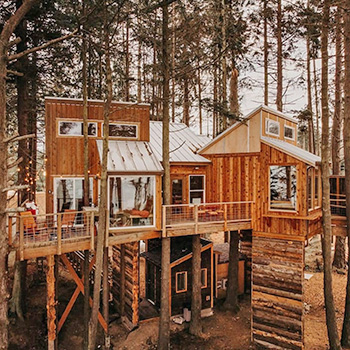
After a day covering Olympic National Park hikes, you’ll want somewhere spacious and comfortable to return to. For hiking near Port Angeles, Eagles Nest and Eagles Perch offer two of our most distinctive stays, both cedar treehouses elevated about 20 feet above the ground with views across the Strait of Juan de Fuca. On the Sequim side, the Sequim Lavender Cabin pairs panoramic Strait views with a private trail to the beach, kayak rentals, and a hot tub. Cedar Lodge is another strong Port Angeles option with beautiful water views and a hot tub, while Driftwood View Cabin in Sequim offers floor-to-ceiling Strait views, private beach access, a full kitchen, and a hot tub for evenings after longer west-side drives.
Pick the Olympic National Park hikes you most want to experience, then choose the vacation rental that makes those trail days easiest. Fall on the Olympic Peninsula should feel like an adventure getaway from start to finish, lodging included. Book your stay today and make this the season you finally take on these trails.
Olympic National Park Hikes: FAQ
What are the best hikes in Olympic National Park?
The Hall of Mosses, Lake Angeles, Blue Mountain, and Third Beach each showcase a different side of the park, from old-growth rainforest to subalpine lake basins to wild Pacific coastline. Together they cover the range of landscapes that make Olympic National Park hikes worth planning a full trip around. Hiking is one of the many things to do in Olympic National Park.
Where to stay in Olympic National Park?
Port Angeles and Sequim both make strong home bases for exploring Olympic National Park hikes. Port Angeles sits closest to Lake Angeles and Deer Park, while Sequim offers easy access to the Strait of Juan de Fuca and nearby beaches. Vacation rentals with hot tubs and full kitchens make it easy to recover between trail days.
How many days do you need for Olympic National Park hikes?
Three to four days is enough to cover a rain forest hike like the Hall of Mosses, a mountain hike like Lake Angeles, and a coastal hike like Third Beach without rushing. Add a day if you also want to fit in a visit to Deer Park or a slower day at the beach.
When is the best time to hike in Olympic National Park?
Early July through October covers most of the park’s higher-elevation trails, including Lake Angeles, while lower-elevation hikes like the Hall of Mosses and Third Beach can be enjoyed well into fall. October in particular offers cooler temperatures, fall color, and fewer crowds on the trail.
Is Olympic National Park worth visiting for hiking?
Yes. Few parks in the country let you hike temperate rainforest, subalpine lake basins, and wilderness coastline within the same trip. Fall adds cooler hiking weather and noticeably thinner crowds to that range of terrain.