St. Augustine Historic District: What to See, Do, and Know Before You Go
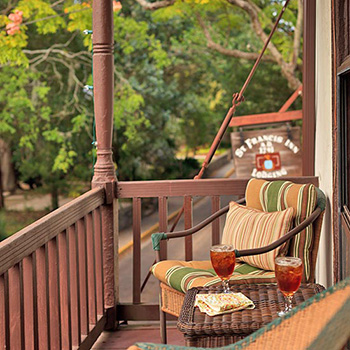
St Francis Inn Bed and Breakfast
St. Augustine, Florida
Historic Bed and Breakfast in St. Augustine offering charming rooms, private balconies, evening socials, gourmet breakfast and a quiet romantic retreat steps from downtown.
Walking Through the St. Augustine Historic District
The St. Augustine Historic District packs more than 450 years of history into a stretch of downtown you can cover on foot in an afternoon. Brick-paved streets run from the Old City Gate toward the Castillo de San Marcos, and the pedestrian stretch of St. George Street lines the way with colonial-era buildings, hidden courtyards, coffee shops, galleries, and the occasional horse-drawn carriage. Old Town St. Augustine keeps that coastal, unhurried pace even as the history piles up around every corner.
The district preserves the heart of the oldest continuously occupied European settlement in the continental United States, founded in 1565 by Spanish explorer Pedro Menéndez de Avilés. The St. Augustine Town Plan National Historic Landmark District still follows the narrow streets, small blocks, and central plaza laid out under Spanish colonial planning centuries ago. Walk from the Old City Gate down St. George Street to the Plaza de la Constitución, then continue south toward Aviles and St. Francis streets, and you’ll pass through several distinct layers of historic St. Augustine in a short walk.
Things to Do in the St. Augustine Historic District
Within a few blocks, you can find so many of the top things to do in St. Augustine. You can explore a Spanish fort, walk through a Gilded Age hotel, and step into a museum housed in another of Henry Flagler’s grand resorts.
Castillo de San Marcos, construction of which began in 1672, is the oldest masonry fortification in the continental United States, built from coquina quarried on nearby Anastasia Island. Historic weapons demonstrations with cannons or muskets take place on select dates, so check the National Park Service calendar before a visit. Flagler College occupies the former Hotel Ponce de Leon, Flagler’s 1888 Gilded Age hotel, where guided tours take you through the Rotunda, Courtyard, and Dining Hall, the last known for its 79 Louis Comfort Tiffany stained-glass windows. Across King Street, the Lightner Museum fills the former Hotel Alcazar with fine and decorative arts and Gilded Age furnishings, including the building’s original indoor swimming pool.
The Cathedral Basilica of St. Augustine, home to the oldest Catholic parish in the United States, dates its current church building to 1793 through 1797. The Colonial Quarter offers a living-history look at daily life in the colonial era, with blacksmithing demonstrations and a 35-foot watchtower replica for views over the bayfront. Plaza de la Constitución remains a shaded gathering spot at the district’s center, and after dark, ghost tours wind past old cemeteries and historic streets tied to the city’s best-known legends.
Where to Stay: A Bed and Breakfast in the Middle of Old Town
For a historic getaway that puts all of this within walking distance, our Bed and Breakfast in St. Augustine sits directly on brick-paved St. George Street, in the quieter southern end of Old Town. The inn dates to 1791 and is listed on the National Register of Historic Places, with 19 individually decorated guest rooms and suites spread across five historic buildings. Select rooms feature fireplaces, whirlpool tubs, or private balconies, and every stay includes a daily breakfast buffet.
The details add up after a day spent exploring. A complimentary wine-and-beer social hour runs every evening, cookies come out fresh daily, and the courtyard fire pit is set up for s’mores after dark. Complimentary bicycles make it easy to cover more ground, and guests receive complimentary admission to the St. Augustine Lighthouse and Maritime Museum along with a 50% discount at the Oldest House Museum. Back at the inn, a solar-heated pool, shaded garden courtyard, and private guest parking round things out.
Book your stay at the St. Francis Inn and experience the St. Augustine Historic District right outside your door.
Frequently Asked Questions
Where is the historic district in St. Augustine?
The St. Augustine Historic District encompasses the downtown core, stretching from the Old City Gate along the pedestrian stretch of St. George Street to landmarks such as Castillo de San Marcos and Plaza de la Constitución.
Where to stay in the St. Augustine Historic District?
Staying directly on St. George Street, such as at the St. Francis Inn, puts you within walking distance of the fort, museums, restaurants, and the district’s historic streets.
When was St. Augustine founded?
St. Augustine was founded in 1565 by Spanish explorer Pedro Menéndez de Avilés, making it the oldest continuously occupied European settlement in the continental United States.
What is the oldest fortification in the historic district?
Castillo de San Marcos, construction of which began in 1672, is the oldest masonry fortification in the continental United States.
Book your stay at the St. Francis Inn and make the St. Augustine Historic District part of your next historic getaway.