Outdoor Adventures
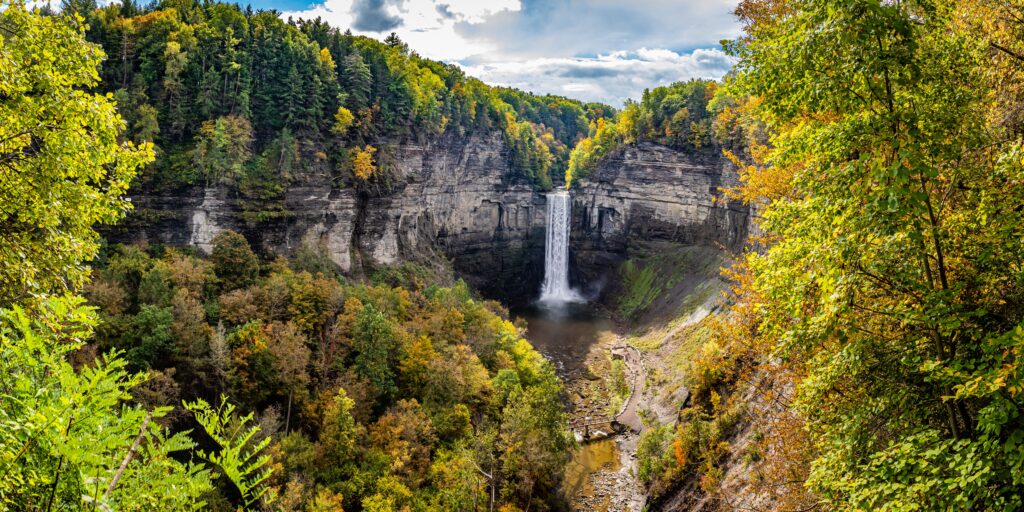
Most Stunning Finger Lakes Waterfall
Hike the Taughannock Falls Gorge Trail Near Ithaca
If you are planning an adventure in the Finger Lakes, few experiences compare to a visit to the Taughannock Falls Gorge Trail. Located within Taughannock Falls State Park near Trumansburg, this accessible trail leads visitors directly to the base of Taughannock Falls, a dramatic 215-foot single-drop waterfall that stands taller than Niagara Falls. Frequently recognized as one of the most impressive Finger Lakes waterfalls, it is also a leading choice for travelers searching for the best Ithaca NY waterfall.
The Taughannock Falls Gorge Trail spans approximately 1.5 miles round trip and follows a mostly flat path through a striking rock gorge. Along the way, Taughannock Creek winds beside the trail, while towering cliff walls create a memorable setting that feels surprisingly remote despite being only a short drive from Ithaca. The easy terrain makes this Taughannock Falls hike appealing for visitors of all experience levels.
To make the most of your visit, consider starting early in the morning when the trail is often quieter and the sunlight highlights the textures and colors of the gorge walls. After reaching the falls, continue exploring Taughannock Falls State Park by visiting the Taughannock Falls overlook via the North Rim Trail or South Rim Trail. These elevated viewpoints provide a completely different perspective of the waterfall and surrounding forest.
Stay at One of the Finest Finger Lakes Hotels
A day spent exploring Taughannock State Park is even better when paired with exceptional accommodations nearby. The Inn at Gothic Eves offers guests a refined retreat close to the park, making it easy to return from the trail and unwind in comfort. Thoughtfully designed guest rooms feature upscale amenities, including fireplaces, soaking tubs, and steam showers in select accommodations.
Guests can also enjoy the property’s on-site spa, which provides a relaxing way to recharge after a day outdoors. Farm-to-table breakfasts featuring seasonal and locally sourced ingredients help prepare visitors for another day of exploring the region.
Beyond the falls themselves, there are countless things to do near Ithaca and throughout the Finger Lakes. From wineries and lakeside activities to charming small towns and scenic drives, the region offers more than enough attractions for a full weekend getaway. Whether you are discovering Taughannock Falls for the first time or returning for another visit, the combination of natural beauty, outdoor recreation, and welcoming hospitality makes this destination one of the best places to experience the Finger Lakes. Book your stay today.
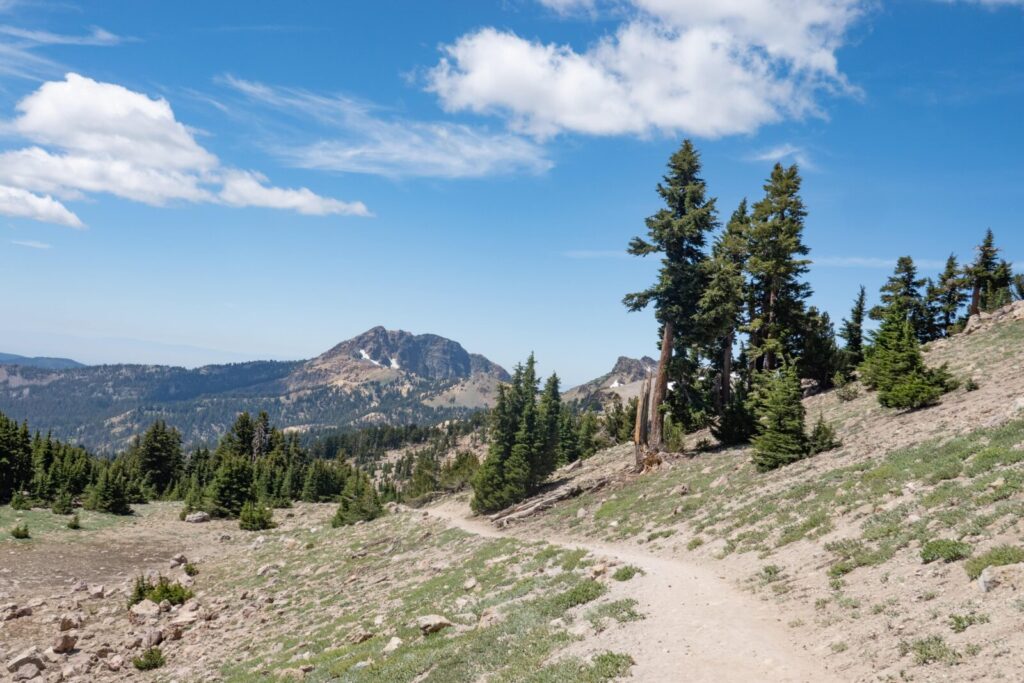
Mountain Adventure in Northern California
Best Lassen Peak Trail Hike for Mountain Adventure
The Lassen Peak Trail is one of the most recognized routes in Lassen Volcanic National Park, offering a direct path to the summit of an active volcano. This 5-mile round-trip hike gains approximately 2,000 feet, making it a true summer adventure for those seeking elevation, expansive views, and a unique geological setting. As the trail climbs, dense forest transitions into open volcanic terrain, where rock and ash define the landscape and create uninterrupted sightlines across Northern California.
The steady switchbacks make the ascent manageable, though the elevation is noticeable from the start. With limited tree cover along much of the route, the Lassen Peak Trail provides wide, panoramic views that expand with every step. On clear days, hikers can see alpine lakes, surrounding peaks, and the broader wilderness that defines this part of the state.
The best time to hike the Lassen Peak Trail is in the summer and the fall, though snow can linger into early season. Wildflowers such as lupine and paintbrush appear along the lower sections, while higher elevations shift to sparse vegetation, including mosses and lichens that slowly break down volcanic rock. Wildlife sightings may include marmots, pikas, and Clark’s nutcrackers, particularly on less-trafficked spots along the trail.
After your Lassen Peak Trail, the park offers a range of experiences. Visitors can explore hydrothermal areas like Bumpass Hell, paddle on Manzanita Lake, or choose from several other Lassen Volcanic National Park trails that vary in difficulty and terrain.
Hotels Near Lassen National Park
After a full day on the trail, comfort becomes part of the experience. St. Bernard Lodge is a well-established option among Hotels near Lassen National Park. Guests can return from the Lassen Peak Trail, take a hot shower, and enjoy a home-cooked meal at the on-site restaurant. Planning ahead ensures a smoother trip, especially during the busy summer season.
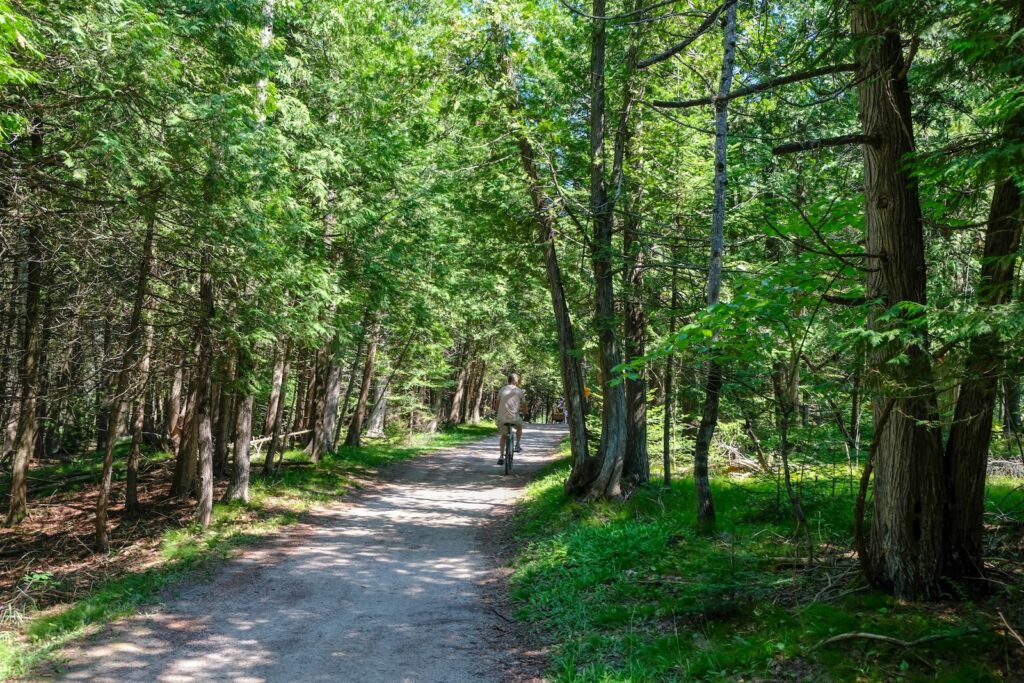
Mountain Bay State Trail: A Wausau Rider’s Guide
Riding the Mountain Bay State Trail
The Mountain Bay State Trail runs 83 miles from Weston, just outside Wausau, to Howard Memorial Park near Green Bay, following a former Chicago and Northwestern Railroad corridor through Marathon, Shawano, and Brown Counties. That old rail bed gives the trail a gentle, consistent grade, which is part of why it ranks among the best bike trails in Wisconsin for riders who want mileage without steep climbs. The surface is gravel clay rather than pavement, so if you’re specifically hunting for paved bike trails in Wisconsin, plan your tires accordingly. A gravel bike, hybrid, or mountain bike will handle the terrain far more comfortably than a road bike.
The trail’s name comes from the two landmarks near its opposite ends, Rib Mountain and Green Bay, and the route in between passes through farmland, wooded stretches, and small towns that give the ride a changing backdrop mile after mile. There’s a short gap in the trail near Shawano, where cyclists use local roads to reconnect with the corridor, so it’s worth checking a current Mountain Bay Trail map before committing to a long stretch you haven’t ridden.
Wisconsin requires a state trail pass for cyclists 16 and older on the Mountain Bay Trail, though walkers and hikers don’t need one. Day and annual passes are available online through the Wisconsin DNR, at participating vendors, and at self-registration stations near several Marathon County trailheads. On the Wausau side, the official western terminus sits next to the Weston Municipal Center, with additional access points at Ringle, the Marathon County Landfill, and Norrie. That gives riders the flexibility to tackle a single section instead of committing to the full route in a single trip.
Where to Stay Near the Trail in Wausau
After logging miles on one of Wisconsin’s longest rail trails and exploring things to do in Wausau, most riders want a comfortable place close to downtown Wausau. The Stewart Inn puts you there. Set in a restored 1906 Prairie-style mansion designed by George Maher, a key figure in the American Arts and Crafts movement, the inn sits within six blocks of downtown restaurants and shops and about a 12-minute drive from the trail’s western terminus in Weston. Every guest room includes a king bed, an ensuite bath, and a gas fireplace, and mornings start with a multi-course, made-from-scratch breakfast.
For anyone building an adventure getaway around the Mountain Bay State Trail, staying at one of the top-rated Wausau hotels means you can pair a full day of riding with an evening wine reception and a genuinely restful night before heading back out. Among Wisconsin rail trails, few pair this easily with a historic, walkable home base.
Frequently Asked Questions
How long is the Mountain Bay State Trail?
The trail covers 83 miles between Weston, near Wausau, and Howard Memorial Park near Green Bay.
Where does the Mountain Bay State Trail start and end?
Its western terminus sits next to the Weston Municipal Center outside Wausau, and it ends at Howard Memorial Park near Green Bay.
Do you need a Wisconsin state trail pass to ride it?
Yes, cyclists 16 and older need a Wisconsin state trail pass, available through the DNR online, at vendors, or at self-registration stations near several Marathon County trailheads. Hikers and walkers do not need one.
Is the Mountain Bay Trail paved?
No, the surface is gravel and clay, so a gravel bike, hybrid, or mountain bike will ride more comfortably than a road bike.
Book your stay at the Stewart Inn, one of the most established Wausau hotels, and make the Mountain Bay State Trail part of your next adventure getaway.
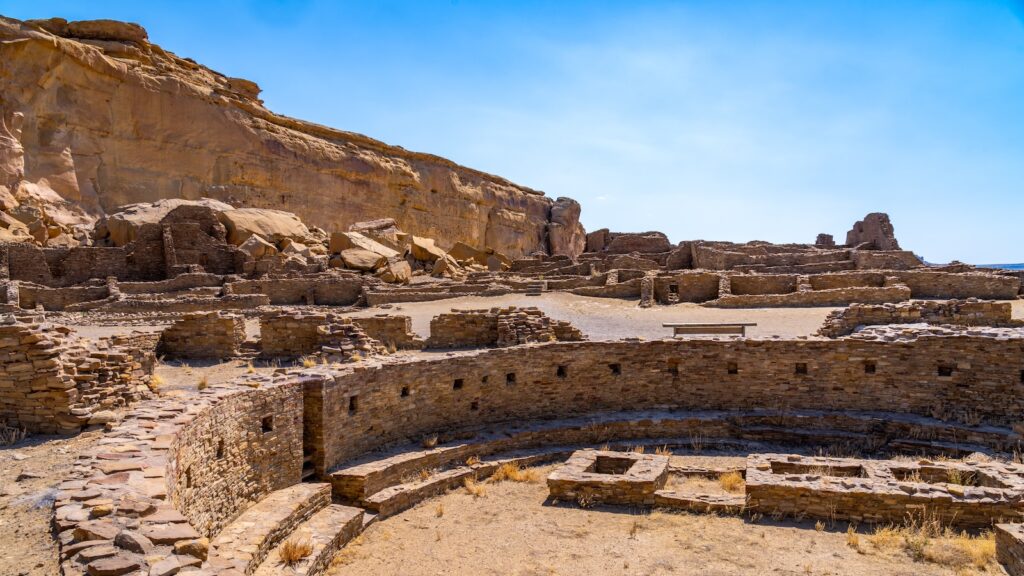
National Parks near Farmington, New Mexico
Best National Parks in New Mexico Near Farmington
Exploring National Parks in New Mexico offers a deeper understanding of the Southwest’s layered history, especially in the Farmington region. This area provides direct access to two of the state’s most significant cultural sites, making it an ideal destination for an adventure-focused itinerary. From preserved ancestral Puebloan structures to expansive desert landscapes, these parks present a meaningful connection to both history and place.
Chaco Culture National Historical Park and Aztec Ruins National Monument stand out among New Mexico National Parks for their cultural importance and accessibility. Chaco Culture, located about 79 miles from Farmington, was a major center of ancestral Puebloan life between 850 and 1250 CE. Visitors can explore large stone complexes known as Great Houses, including Pueblo Bonito and Chetro Ketl, as well as kivas, petroglyphs, and an extensive road system. The park’s scenic loop drive and hiking trails provide structured ways to experience the site, while its remote setting creates ideal conditions for stargazing.
Closer to town, Aztec Ruins National Monument offers a more immediate and equally engaging experience. Just 14 miles from Farmington, this site preserves a 12th- and 13th-century community with a 450-room Great House and a reconstructed Great Kiva. A self-guided trail allows visitors to move through the ruins while learning about ancestral Puebloan life through interpretive signage and exhibits.
Stay Near National Parks in New Mexico
Between visits to these National Parks in New Mexico, Farmington serves as a convenient base with additional things to do nearby. Visitors can spend time along the San Juan River, explore local galleries, or add a day trip to Mesa Verde National Park in Colorado to their itinerary.
Among Hotels in Farmington, Casa Blanca Inn and Suites offers a refined lodging option for travelers seeking comfort and privacy after a full day of exploration. With thoughtfully designed rooms and a location that keeps Chaco Culture National Historical Park and Aztec Ruins National Monument within reach, it provides a practical and comfortable place to stay. At fresh, house-made breakfast each morning and a quiet atmosphere in the evening help balance the pace of an active Southwest adventure.

Nearby Stops on the Great Florida Birding Trail
Best Great Florida Birding Trail Near Flagler Beach
The Great Florida Birding Trail brings together more than 500 designated sites across the state, but few stretches feel as accessible and diverse as the section near Flagler Beach. Here, wild shoreline, tidal marshes, maritime forests, and river habitats converge within minutes, creating a true beach adventure for birders who want variety without long drives.
Birding near Flagler Beach means starting your morning with shorebirds skimming the Atlantic surf, then shifting inland to quiet estuaries along the Intracoastal Waterway. Gamble Rogers Memorial State Recreation Area is a standout stop on the Florida birding trail. On the ocean side, look for black skimmers, least terns, sanderlings, and willets moving with the tide. Across the road, roseate spoonbills, ospreys, and great egrets patrol the river.
Bulow Creek State Park offers a completely different Florida nature experience. Its shaded oak canopy attracts barred owls, pileated woodpeckers, and migratory warblers. Nearby, Washington Oaks Gardens State Park combines formal gardens with tidal marsh and a coquina shoreline, making it one of the best birding locations in Florida for those who appreciate contrasting habitats in a single visit.
Stay Steps from the Sand and the Trail
After a full day of birdwatching near Flagler Beach, retreat to a boutique hotel designed for relaxation and convenience. Island Cottage Inn offers private beach access, making early-morning birdwatching a Florida visitor’s dream as simple as stepping onto the sand. Watch pelicans glide low over the water, scan for sandpipers racing the tide, then return for coffee and breakfast at the on-site cafe.
With easy access to multiple Great Florida Birding Trail stops and thoughtful amenities that make early starts effortless, this beach adventure blends wildlife, ocean views, and refined comfort. Book your stay and experience the trail!

Observe Raptors at Hawk Mountain Sanctuary
Watch the Fall Migration
Every fall, the ridgeline above Kempton, Pennsylvania fills with wings. Hawk Mountain Sanctuary, the world’s first refuge built specifically for birds of prey, sits along the Appalachian flyway, and from mid-August through November it becomes a flight path for thousands of migrating raptors. If you’re planning a wildlife getaway in eastern Pennsylvania this season, staying at The South Mountain Inn puts you less than an hour from the sanctuary.
When the Hawk Migration Builds
The season arrives in stages rather than all at once. Bald eagles are usually the first to appear, often by mid-August, with osprey migration and American kestrels moving through around the same window. By mid-September, broad-winged hawks take over the skies, frequently traveling in large, swirling groups called kettles that can number in the hundreds.
Sharp-shinned hawks, red-tailed hawks, and golden eagles round out the season into October and November, and Hawk Mountain’s counters have recorded as many as sixteen raptor species passing overhead in a single day. Late October tends to bring the widest variety of species at once, and the best viewing usually comes on days with northwest winds following a cold front, since raptors ride those air currents most efficiently. Most sightings happen between 8 am and 5 pm.
The Hawk Count Behind the Sanctuary’s Reputation
Hawk Mountain has run an official hawk count every fall since 1934, making it the longest continuous raptor migration record in the world. The count runs each year from August 15 through December 15, with staff and volunteers stationed at North Lookout daily to identify and tally what passes overhead. A typical season brings around 18,000 raptors past the lookout, with single-day peaks near 3,000 birds in late September. The data has shaped raptor conservation research for decades. Rachel Carson even drew on Hawk Mountain’s numbers as evidence in Silent Spring, which tells you how much weight this small mountain carries in the birding world.
Raptors Worth Watching For
Broad-winged hawks and red-tailed hawks tend to soar in large groups and are among the most commonly spotted birds of the season. Sharp-shinned hawks and Cooper’s hawks fly with quicker, more direct wingbeats, while falcons like the American kestrel, merlin, and peregrine falcon add speed to the mix. Bald eagles and golden eagles are the sightings most visitors hope for, and turkey vultures and black vultures drift past on thermals throughout the season.
Fall Foliage Pennsylvania Travelers Plan Trips Around
Part of what makes this trip worthwhile is the timing. Fall foliage in this part of Pennsylvania tends to peak alongside the migration, so broad-winged hawks and osprey often glide over ridgelines covered in red and gold. Volunteers are stationed at the lookouts throughout the season and are glad to help newcomers spot and identify what’s flying overhead, so no birding experience is necessary.
Your Home Base for This Wildlife Getaway
Staying at The South Mountain Inn, our Bed and Breakfast in Pennsylvania that guests return to year after year, is the perfect base for a hawk-watching weekend. The inn sits on seven wooded acres with sweeping valley views, and each morning starts with fresh coffee delivered to your door followed by a full breakfast, including vegan and gluten-free options. After a day at Hawk Mountain, unwind on the porch or book one of their experience packages, from guided hikes to paddling at Blue Marsh Lake.
Reserve your stay at The South Mountain Inn and make Hawk Mountain part of your weekend.
Frequently Asked Questions
Where is Hawk Mountain Sanctuary located?
Hawk Mountain Sanctuary sits along the Appalachian flyway near Kempton, Pennsylvania, less than an hour from The South Mountain Inn.
What is the hawk count at Hawk Mountain Sanctuary?
Hawk Mountain has tracked an official hawk count every fall since 1934, averaging around 18,000 raptors counted each season between August 15 and December 15.
When is the best time to see the hawk migration?
Bald eagles arrive first in mid-August, broad-winged hawks peak in mid-September, and late October typically brings the widest variety of species in a single day.
What can I expect to see during osprey migration season?
Osprey typically move through alongside bald eagles and American kestrels in mid to late August, ahead of the larger broad-winged hawk kettles in September.
Odiorne State Park: What to Do, See, and Know Before You Go
Exploring Odiorne State Park on the New Hampshire Seacoast
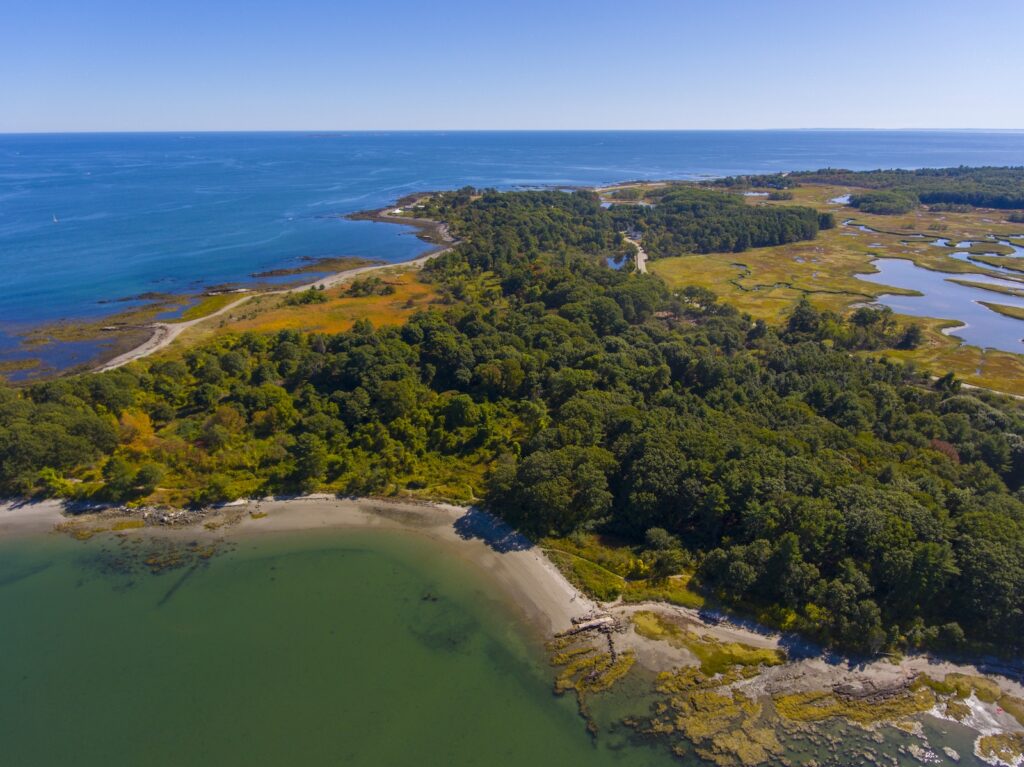
Odiorne State Park is where the New Hampshire coast shows off nearly everything it has at once. Set in Rye, the 135-acre park combines rocky shoreline, a sandy beach, salt marsh, freshwater and saltwater ponds, and dense forest into one stretch of coastline, connected by a network of walking trails. It’s an easy outdoor getaway on its own, and its location near Portsmouth and Exeter makes it just as easy to fold into a longer Seacoast trip.
The human history at Odiorne Point runs deep. Indigenous peoples lived throughout this stretch of the New Hampshire coast for thousands of years, and European settlement at the site dates back to 1623. During World War II, the federal government took over the land to build Fort Dearborn, a coastal defense installation meant to protect Portsmouth Harbor. Today, concrete structures like Battery Seaman remain among the most distinctive sights at Odiorne Point State Park.
Hiking the Odiorne Point State Park Trails
The trail system is one of the best reasons to spend a few hours here. The Odiorne Point State Park trails wind through woods, marshland, and historic sites, and along the shoreline itself. Head toward Frost Point for views across Little Harbor and out to Fort Stark, along with access to the park’s breakwater. Columbus Road offers a quieter route lined with old stone walls, while other paths pass Battery Seaman and the remaining pieces of Fort Dearborn. Restoration work has changed some of the trail network near Little Harbor, so check the current NH State Parks trail map and follow any posted detours before setting out.
The Seacoast Science Center sits right inside the park and is typically open seven days a week, though it’s worth checking the seasonal calendar ahead of a visit. Advance tickets are recommended, and admission to the Science Center is separate from park admission. It’s an easy add-on for families or anyone interested in marine life.
Odiorne State Park charges a small day-use admission fee, with free entry for children five and under and New Hampshire residents 65 and older. Parking is limited, especially on busy weekends and holidays, so a day-use reservation in advance is a good idea. Walk-in spaces are available on a first-come, first-served basis when the park hasn’t reached capacity, and pets are not permitted anywhere in the park.
If tide pooling is the plan, aim for roughly two to three hours before or after low tide, wear shoes that can handle wet, slippery rocks, and leave shells, rocks, and marine life exactly where you find them.
Where to Stay Near Odiorne Point: Exeter Hotels
After a morning at Odiorne Point, downtown Portsmouth is a short drive away for historic streets, independent shops, and the working waterfront, with Strawbery Banke Museum offering a look at more than 350 years of Portsmouth history. Exeter, about 30 minutes from the park, makes an equally good home base with so many things to do in Exeter, especially if you’re weighing Exeter hotels for the rest of your Seacoast itinerary.
Housed in an 1809 Federal-style mansion directly across from Exeter’s town bandstand, our inn offers eight individually furnished guest rooms and suites, seven with fireplaces, all featuring antiques, fine art, private baths, and Matouk linens. Breakfast is à la carte and made to order, and Ambrose, our on-site restaurant, serves contemporary cuisine built around seasonal, locally sourced ingredients. Staying downtown means Water Street, Phillips Exeter Academy, and the town’s shops and restaurants are all within a short walk.
Book your stay and make our inn the base for your next outdoor getaway on the New Hampshire Seacoast.
Frequently Asked Questions
Where is Odiorne State Park?
Odiorne Point State Park is located in Rye, New Hampshire, along the Seacoast between Portsmouth and the rest of the coastal towns.
Is there an admission fee at Odiorne Point State Park?
Yes, the park charges a small day-use fee, with free admission for children five and under and New Hampshire residents 65 and older.
Are pets allowed at Odiorne State Park?
No, pets are not permitted anywhere in Odiorne Point State Park.
Is the Seacoast Science Center included in park admission?
No, admission to the Seacoast Science Center is separate from Odiorne Point State Park’s day-use admission, and advance tickets are recommended.
Book your stay at the Inn by the Bandstand and start planning your outdoor getaway to Odiorne State Park and the rest of the Seacoast.
Olympic National Park Hikes: The Best Trails to Explore This Fall
Fall might be the most underrated season for Olympic National Park hikes. The air turns crisp, the rain forests settle into their wetter, greener rhythm, and bigleaf and vine maples scatter gold and yellow through a landscape that’s mostly evergreen and moss. By October, summer’s crowds have thinned, and the trails have room to breathe. Whether you’re after easy hikes in Olympic National Park with kids in tow or one of the best day hikes in Olympic National Park with real elevation to earn, autumn is worth building a trip around.
Hiking isn’t the only draw this time of year. The Olympic Peninsula Loop links Lake Crescent, rain forest, and coastal stops into one scenic drive; Olympic National Park beaches offer a slower afternoon between trail days; and the Sol Duc Valley hosts an annual salmon run at Salmon Cascades. If you want a rest day, fall is also prime season to visit Olympic Peninsula wineries. Together, these fill out a full fall getaway around your hiking plans.
Best Olympic National Park Hikes to Take This Fall
These four hikes cover a rain forest, a subalpine lake, mountain views, and wild Pacific coastline, making them some of the best hikes in Olympic National Park for experiencing the peninsula’s range of landscapes in a single trip.
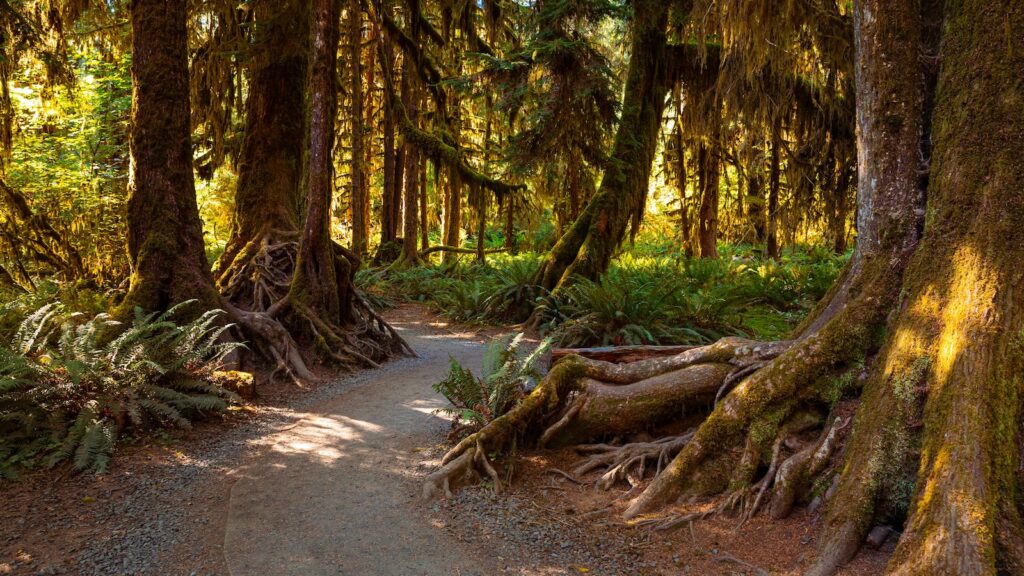
Hall of Mosses, Hoh Rainforest. At 0.8 miles with about 100 feet of elevation gain, the Hall of Mosses is one of the easiest and most rewarding walks in the park. The loop winds through old-growth rain forest, past a grove of maples draped in club moss, with ferns and nurse logs covering the forest floor.
Fall brings a wetter, quieter Hoh Rain Forest, and the bigleaf and vine maples add real color against the moss-covered trunks. It’s also one of the smarter times to visit if you’re trying to avoid the Hoh’s peak summer traffic. The drive from Port Angeles runs about two hours, and less than an hour from Forks, so plan most of a day around it rather than squeezing it in between other hikes.
Lake Angeles. For one of the best day hikes in Olympic National Park close to Port Angeles, Lake Angeles delivers. The trail starts in the Heart O’ the Hills area and climbs 3.5 miles to a subalpine lake basin at roughly 4,250 feet, making the round trip about 7 miles. The National Park Service lists early July through October as the ideal window. Check trail and weather conditions before heading out, especially later in the season when mountain weather can turn quickly. With Heart O’ the Hills only about five miles from Port Angeles, this is one of the most convenient substantial hikes near Port Angeles.
Blue Mountain, Deer Park. This is the shortest hike on the list and one of the biggest payoffs for the effort. The Rain Shadow Loop climbs just 0.5 miles to the Blue Mountain summit area, gaining about 170 feet, and opens onto sweeping views across the surrounding mountains and lowlands. Getting there is the real challenge. Deer Park Road runs 18 miles, narrow and steep, with the final 9 miles unpaved, and it isn’t suitable for RVs or trailers. The road closes at the park boundary from late fall until spring snowmelt, so treat Blue Mountain as an early fall opportunity and check current Deer Park Road conditions before leaving Port Angeles or Sequim.
Third Beach. For something entirely different, head toward La Push and the park’s wilderness coast. The Third Beach Trail runs about 1.4 miles one way through coastal forest before dropping to a sandy beach lined with driftwood, sea stacks, and distant views of Giants Graveyard. Fall storms can bring high winds and heavy surf, making beach hiking difficult or unsafe, and parking at the trailhead is limited. Check the marine forecast and tides before you go, and carry a tide chart if you plan to continue past Third Beach along the wilderness coast.
Where to Stay for Easy Access to These Trails
Where you stay shapes how these Olympic National Park hikes fit together. A Port Angeles base puts Lake Angeles and Deer Park within easy reach, while the Hoh Rain Forest and Third Beach are longer days that cross the peninsula. The Olympic Peninsula itself stretches from mountains to rainforest to coastline, so plan for driving time between ecosystems. Our lodging near Olympic National Park in Port Angeles and Sequim works especially well if you want quick access to the park’s northern side while still leaving room for a west side adventure or two.
Lodging Olympic National Park Travelers Rely on After a Long Trail Day
After a day covering Olympic National Park hikes, you’ll want somewhere spacious and comfortable to return to. For hiking near Port Angeles, Eagles Nest and Eagles Perch offer two of our most distinctive stays, both cedar treehouses elevated about 20 feet above the ground with views across the Strait of Juan de Fuca. On the Sequim side, the Sequim Lavender Cabin pairs panoramic Strait views with a private trail to the beach, kayak rentals, and a hot tub. Cedar Lodge is another strong Port Angeles option with beautiful water views and a hot tub, while Driftwood View Cabin in Sequim offers floor-to-ceiling Strait views, private beach access, a full kitchen, and a hot tub for evenings after longer west-side drives.
Pick the Olympic National Park hikes you most want to experience, then choose the vacation rental that makes those trail days easiest. Fall on the Olympic Peninsula should feel like an adventure getaway from start to finish, lodging included. Book your stay today and make this the season you finally take on these trails.
Olympic National Park Hikes: FAQ
What are the best hikes in Olympic National Park?
The Hall of Mosses, Lake Angeles, Blue Mountain, and Third Beach each showcase a different side of the park, from old-growth rainforest to subalpine lake basins to wild Pacific coastline. Together they cover the range of landscapes that make Olympic National Park hikes worth planning a full trip around. Hiking is one of the many things to do in Olympic National Park.
Where to stay in Olympic National Park?
Port Angeles and Sequim both make strong home bases for exploring Olympic National Park hikes. Port Angeles sits closest to Lake Angeles and Deer Park, while Sequim offers easy access to the Strait of Juan de Fuca and nearby beaches. Vacation rentals with hot tubs and full kitchens make it easy to recover between trail days.
How many days do you need for Olympic National Park hikes?
Three to four days is enough to cover a rain forest hike like the Hall of Mosses, a mountain hike like Lake Angeles, and a coastal hike like Third Beach without rushing. Add a day if you also want to fit in a visit to Deer Park or a slower day at the beach.
When is the best time to hike in Olympic National Park?
Early July through October covers most of the park’s higher-elevation trails, including Lake Angeles, while lower-elevation hikes like the Hall of Mosses and Third Beach can be enjoyed well into fall. October in particular offers cooler temperatures, fall color, and fewer crowds on the trail.
Is Olympic National Park worth visiting for hiking?
Yes. Few parks in the country let you hike temperate rainforest, subalpine lake basins, and wilderness coastline within the same trip. Fall adds cooler hiking weather and noticeably thinner crowds to that range of terrain.
Olympic Peninsula Birding at Dungness River Nature Center
Spring Birding Adventure at the Dungeness River Nature Center
Sequim is the kind of coastal escape where the sky feels endless, the water is always within reach, and wildlife is part of the daily view. If you’re planning an adventure-focused trip on the Olympic Peninsula, start with the Dungeness River Nature Center, an interpretive hub built to inspire stewardship through hands-on exhibits, guided walks, and seasonal programs. Set inside Railroad Bridge Park, the Dungeness River Nature Center is positioned right where riparian forest, meadow, and river habitat meet, which is exactly why Sequim birdwatching here can be so rewarding.
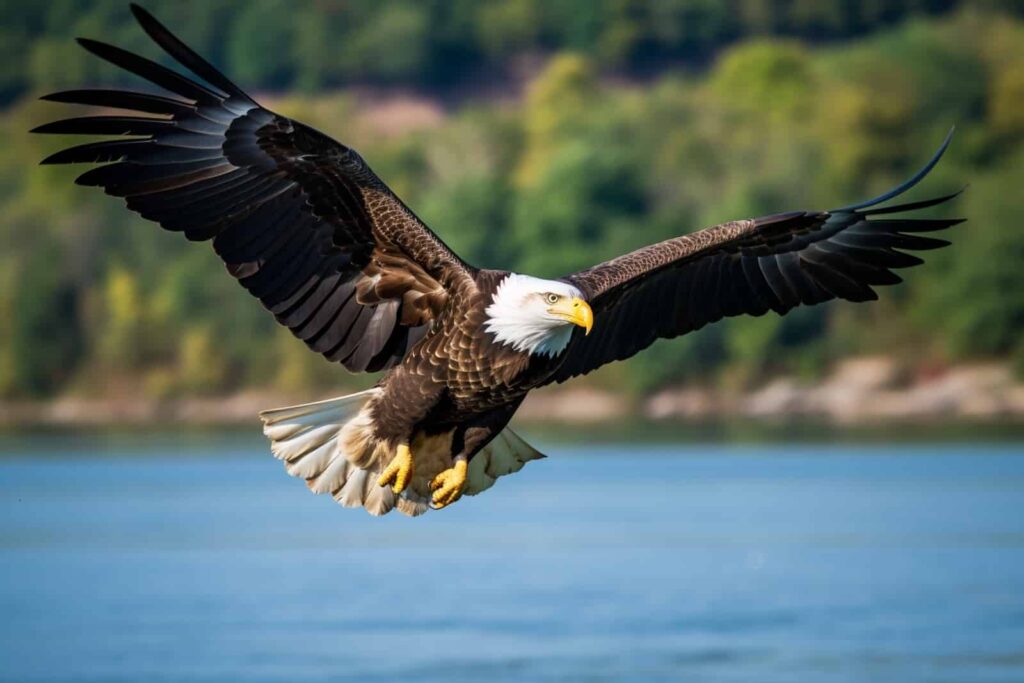
Spring is an especially exciting time to visit the Dungeness River Nature Center. As migration picks up, the trails near the river turn into a living field guide. Join a guided bird walk or a skills-building workshop, and you might spot great blue herons working the shallows, belted kingfishers flashing over the water, bald eagles posted high in the evergreens, and warblers moving through the canopy. For an even bigger spring lineup, many birders plan around Olympic BirdFest, the April festival known for expert-led field trips and access to top locations across the region.
Once you’ve soaked up the Dungeness River Nature Center’s programs, build out your itinerary with more birdwatching in Washington nearby. The Dungeness National Wildlife Refuge offers Strait of Juan de Fuca views and shoreline where shorebirds gather. Sequim Bay State Park is an easy stop for waterfowl and seabirds. Head west to Port Angeles Harbor and Ediz Hook for marine birds and close-up viewing along the piers and spit. If you want to go bigger, Olympic National Park’s varied ecosystems add forest and coastal habitats, expanding your chance to see everything from Steller’s jays to varied thrushes.
Where to Stay for Birding Near Dungeness Bay
Of course, there are way more things to do in Sequim beyond the birds. After a full day outside, your lodging should feel like part of the adventure, not just a place to crash. Among the hotels in Sequim, WA, a waterfront stay on Dungeness Bay puts birding right at your doorstep with direct beach access. Come back from Railroad Bridge Park or the refuge, then unwind in a hot tub, settle into a jetted tub, or step onto your private porch and watch birds drift across the bay. For a spring getaway that balances action with comfort, book direct and make Sequim your coastal base.